Protocols
Three generations of pipe: information → value → intent.
An algorithm decides what to do. A protocol ensures others can coordinate with that decision. Algorithms are internal logic. Protocols are external rules — the handshake.
| Generation | Invented By | What It Pipes | Network Effect |
|---|---|---|---|
| Hyperlink | Tim Berners-Lee, 1989 | Information | The web — anyone can publish |
| Smart contract | Nick Szabo, 1994 | Value | DeFi — anyone can transact |
| Agent protocol | MCP + A2A + VI, 2024-25 | Intent | Autonomous commerce — agents coordinate without intermediaries |
Each generation solved the trust problem of the previous one. Each created a network effect nobody predicted.
Two Agent Tracks
The third generation runs on two tracks.
Digital agents — software coordinating software. A2A for communication, MCP for tool access, UCP for commerce, AP2 for payment, Verifiable Intent for authorization, Sui for settlement.
Physical agents — machines that occupy space, consume energy, and collide when coordination fails. Same infrastructure need: identity, verified time, delegation, payment, settlement. Different substrate.
Both tracks share the same requirement: benchmarkable standards establish trust. Not intentions. Not reputation. Standards that can be verified structurally — the way a compiler rejects unsafe code before it runs. Trust Architecture is where that standard is defined.
Dig Deeper
- Intelligent Hyperlinks — The full three-generation arc: why each generation emerged, what it piped, what it left behind
- Agent Protocols — A2A, MCP, UCP, AP2, Verifiable Intent — digital and physical agent coordination
- Economy of Things — Machine identity, payments, and data exchange for DePIN devices
- Trust Architecture — Why structural standards replace trust-by-assumption — and what the gap looks like in live code
- Smart Contracts — Programmable agreements: EVM, Solana, and Sui
Context
- Essential Algorithm — Algorithms decide the route; protocols enable the handshake
- Standards — Protocols that proved reliable across contexts
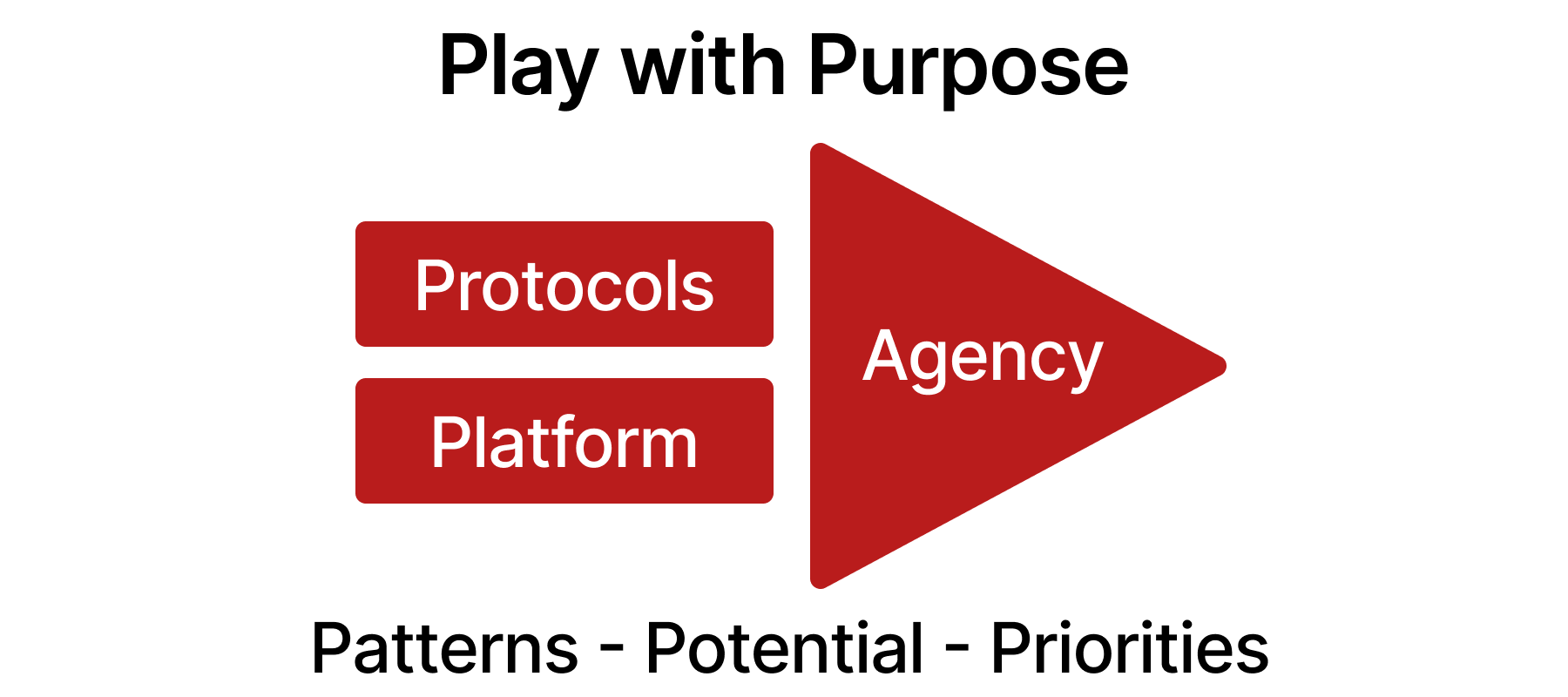
- Platform — Where protocols compound into capability
- Proprietary Data — Oil for AI
- The Mycelium — The infrastructure that carries everything
- Scoreboard — When protocols prove reliable, the scoreboard tracks the pattern
- Agency — Protocols enable the capability side of agency
- Phygital Beings — The agents these protocols serve
- Meetings — Operational protocols follow the same pattern in a different domain
Links
- Protocol AI
- Protocol Land
- Summer of Protocols
- Reading List
- A2A GitHub — Google's agent protocol
- A2A vs MCP — Comparison guide
Questions
What protocol would remove the most friction from your next thousand decisions?
- Where is your algorithm producing the right answer but nobody trusting it — and which protocol would fix that?
- When does a protocol graduate to a standard — and what breaks if you promote too early?
- Which of the nine pillars is your biggest coordination bottleneck?