Music
How do humans learn to coordinate? They play.
Play as Vehicle
Play is the vehicle for social cohesion — learned collaboration and coordination through shared experience.
| Vehicle | What It Teaches | Coordination Type |
|---|---|---|
| Games | Rules, strategy, consequences | Turn-based, competitive |
| Sport | Bodies in space, reading others | Real-time, physical |
| Music | Timing, listening, harmony | Real-time, emotional |
All three share the same structure:
- Shared rules — Everyone knows what "counts"
- Real-time feedback — Consequences are immediate
- Reading others — You must sense what they'll do
- Collective flow — Individual dissolves into group
- Trust through repetition — Reliability builds bonds
Music as Coordination
Music is coordination made audible.
| Element | Coordination Skill |
|---|---|
| Rhythm | Shared time — being in sync |
| Harmony | Complementary roles — filling gaps |
| Melody | Leading and following — turn-taking |
| Dynamics | Reading the room — adjusting together |
| Silence | Knowing when NOT to play |
A band that can't listen can't play. An orchestra without a shared tempo is noise. Music teaches the hardest coordination skill: subordinating your part to the whole while still contributing your voice.
Why Music Matters for AI Age
When AI handles cognitive tasks, what remains human?
- Presence — being there, in the room, in the moment
- Emotional resonance — feeling together
- Physical coordination — bodies moving as one
- Trust through vulnerability — making mistakes together
Music can't be automated and still mean what it means. The value IS the coordination, not the output.
The Loop in Music
LISTEN → ANTICIPATE → PLAY → ADJUST → LISTEN
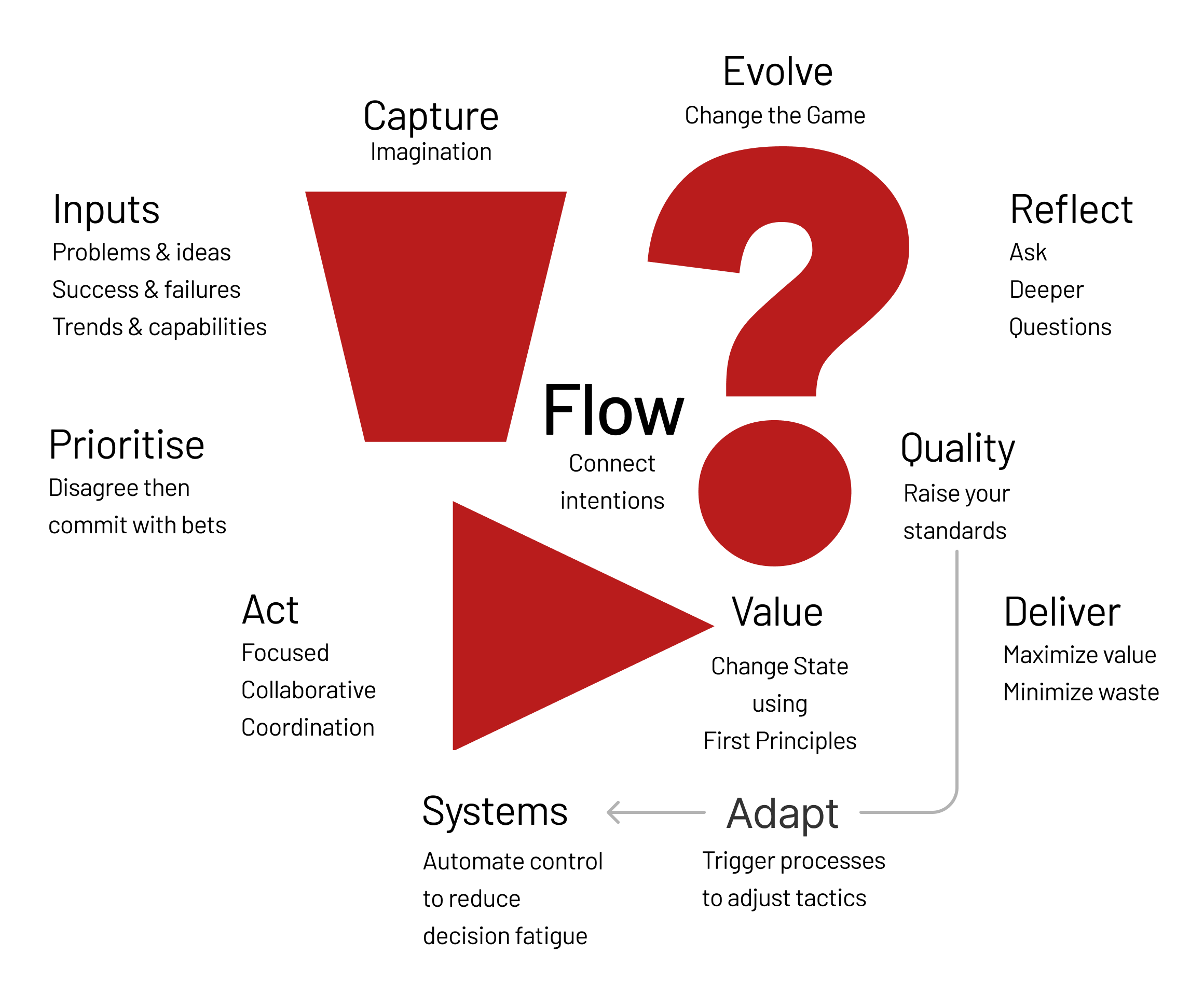
This is the VVFL at human tempo. Capture (listen), Act (play), Measure (hear the result), Reflect (adjust). The loop runs continuously, in real-time, with others.
Flow in music = when the loop runs so fast it disappears. You stop thinking and start being the music.
Context
- Games — Coordination through rules and strategy
- Sport — Coordination through bodies in space
- Flow — When coordination becomes effortless
- Evolution — Music trains reception — the capacity to receive before acting
- Players — The mastermind principle
- Culture — What emerges from coordinated play
- Music Industry — Platform economics and ownership