Purpose
Why are you doing what you're doing?
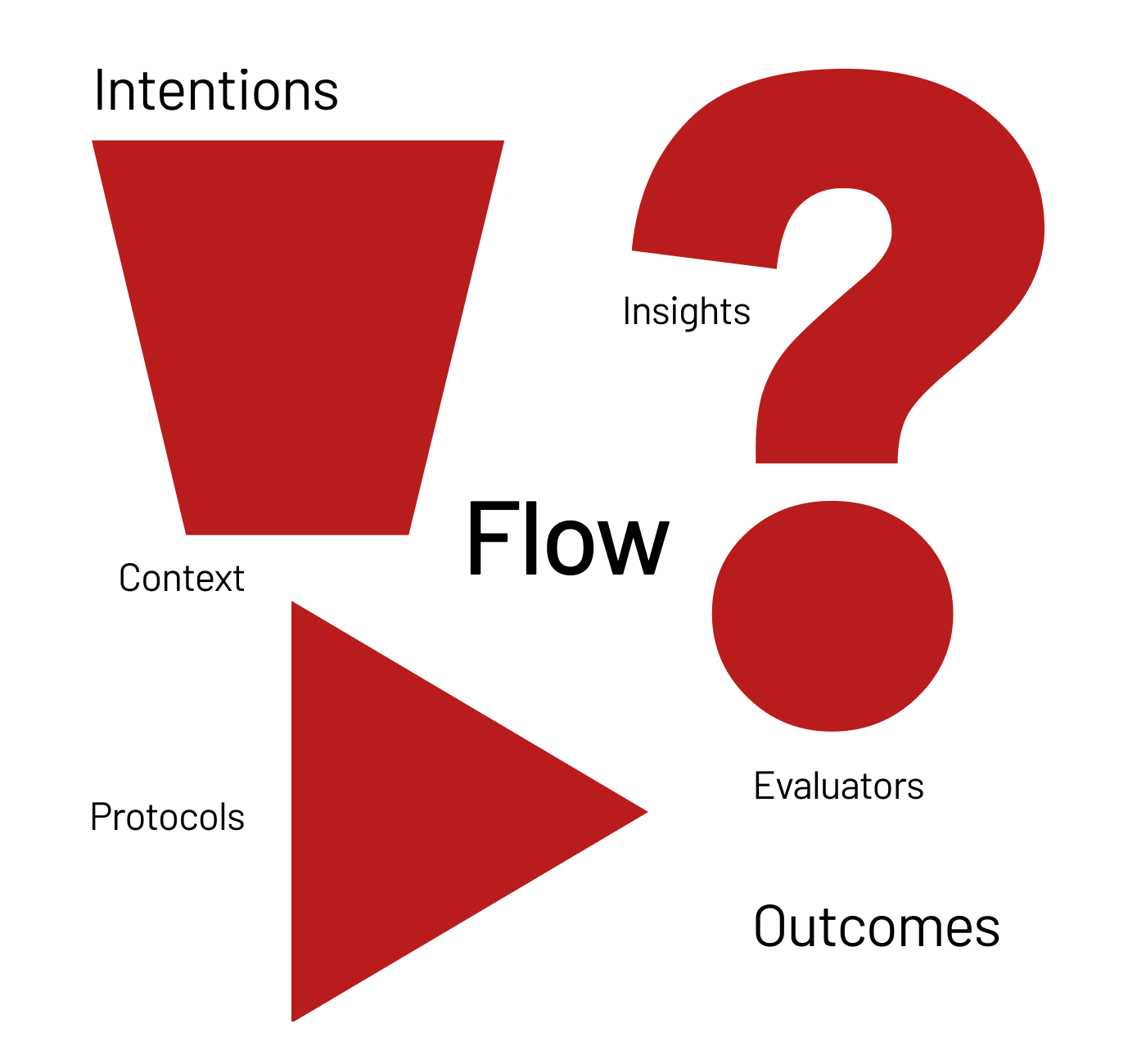
Purpose is not a mission statement. It's the perceive that builds commitment—the felt sense of direction that makes sacrifice meaningful and focus effortless.
Those that have a why can bear with almost any how.
— Nietzsche
The Purpose Problem
Most people don't lack goals. They lack clarity on why those goals matter.
The symptoms:
- Achieving milestones that feel empty
- Working hard on things that don't compound
- Saying yes to opportunities that fragment attention
- Burning out pursuing someone else's definition of success
The root cause: Purpose is perceived, not chosen. You can't decide your way to meaning—you have to discover what already moves you.
The Ps Build Cs
Purpose sits at the start of the loop. It's the first Perceive that enables all the Commits:
| Perceive | Builds | How |
|---|---|---|
| Purpose | Commitment | Knowing why makes sacrifice sustainable |
| Purpose | Credibility | Clear purpose signals authentic intent to others |
| Purpose | Confidence | Direction reduces decision anxiety |
| Purpose | Capital | Purpose attracts aligned resources and people |
Without purpose, the other P's lack direction. With purpose, they compound.
The Purpose Loop
Purpose emerges through the loop of consciousness:
    [P] PERCEIVE ← Purpose lives here
   /           \
  /             \
[A] ----------- [Q]
ACT          QUESTION
Commitment    "Is this aligned?"
- Perceive what moves you (emotion, energy, attention)
- Question why it moves you (values, identity, meaning)
- Act in alignment (commitment, sacrifice, focus)
The loop reveals purpose through iteration. You don't find purpose by thinking—you find it by noticing what you can't stop thinking about.
The P-C Framework for Purpose
| Perceive | Question | Act |
|---|---|---|
| Purpose | Is this aligned with who I am? | Commitment |
| Progress | Are we on track? | Consensus |
| Potential | Is this worth betting on? | Conviction |
Purpose asks the identity question: Is this aligned with who I am?
If yes → commit fully. If no → walk away, even if it's profitable.
Finding Purpose
The Discovery Process
Purpose isn't invented. It's uncovered by walking upstream from emotion:
1. What has annoyed you recently? (emotional trigger)
         ↓
2. What was the exact problem? (walk upstream)
         ↓
3. In your perfect world, how do things work? (vision)
         ↓
4. What artifacts and outcomes would define success? (picture)
         ↓
5. How strong is your appetite to change this? (drive)
Are you willing to put your money where your mouth is?
If not, it's not your purpose. Keep looking.
The Alignment Test
Purpose passes the alignment test when:
- You'd work on this even if no one was watching
- You'd work on this even if it paid less
- You'd work on this even if it took longer than expected
- You'd defend this even if it made you unpopular
- You'd return to this after failure
If you can't check most of these, you have a goal, not a purpose.
Purpose Domains
Purpose manifests differently across life stages:
Intentions
"What direction am I heading?"
Vision, mission, and the trajectory of effort
Meaning
"Why does this matter?"
Values, significance, and the felt sense of purpose
Drive
"What keeps me going?"
Motivation, energy, and the force behind action
The Legacy Arc
Purpose evolves across life stages:
| Life Stage | Purpose Focus | The Loop Serves |
|---|---|---|
| Survive | Stay alive, learn the rules | Self |
| Improve | Get better, find good mates | Self + Others |
| Build | Improve the system, create legacy | Future Generations |
The wisest players eventually realize: the highest-leverage move is building systems that help others play better games.
Aligning Intentions
The hardest challenge: getting multiple people aligned on the same purpose.
The Alignment Stack
Journey → Vision  (Where are we going?)
Roadmap → Mission (How do we get there?)
Incentive → Reward (Why should I care?)
Teamwork → Spirit  (Are we in this together?)
Each layer requires alignment. Break at any layer, and the whole stack fails.
Crypto Incentives
The Principal-Agent Problem: agents (employees, contractors, partners) have different incentives than principals (owners, stakeholders, beneficiaries).
Traditional solutions: monitoring, contracts, culture.
Crypto solution: tokenized alignment—when agents literally own the outcome, incentives align structurally.
| Problem | Traditional Fix | Crypto Fix |
|---|---|---|
| Agent doesn't care | Monitoring, bonuses | Token ownership |
| Misaligned priorities | Management oversight | On-chain governance |
| Trust deficit | Contracts, reputation | Verifiable actions |
| Information asymmetry | Reporting, audits | Transparent ledgers |
This is why incentive engineering matters. Purpose without aligned incentives decays into politics.
The North Star
If you can't articulate your purpose, try inversion:
Pick an enemy. Be the opposite.
| Enemy | Your Purpose |
|---|---|
| Opacity | Transparency |
| Exploitation | Fair exchange |
| Fragmentation | Integration |
| Short-termism | Generational thinking |
| Gatekeeping | Open access |
Your enemy clarifies your purpose faster than introspection.
What Next?
Purpose is the first perceive. It enables everything else:
- Problems — Which gaps are worth closing? → Problems
- Progress — What does success look like? → Progress
- Priorities — What deserves focus now? → Priorities
- Questions — What don't you know yet? → Questions
Resources
Where is your point of difference?