The Logo
Picture The Loop of consciousness.
Nothing worse than the dis-ease of indecision, other than the lack of agency to act on the right decisions.
The P&ID Origin
P&IDs (Process & Instrumentation Diagrams) are how engineers draw factories. Every valve, sensor, pump, and feedback loop — visible on paper before a single pipe gets welded.
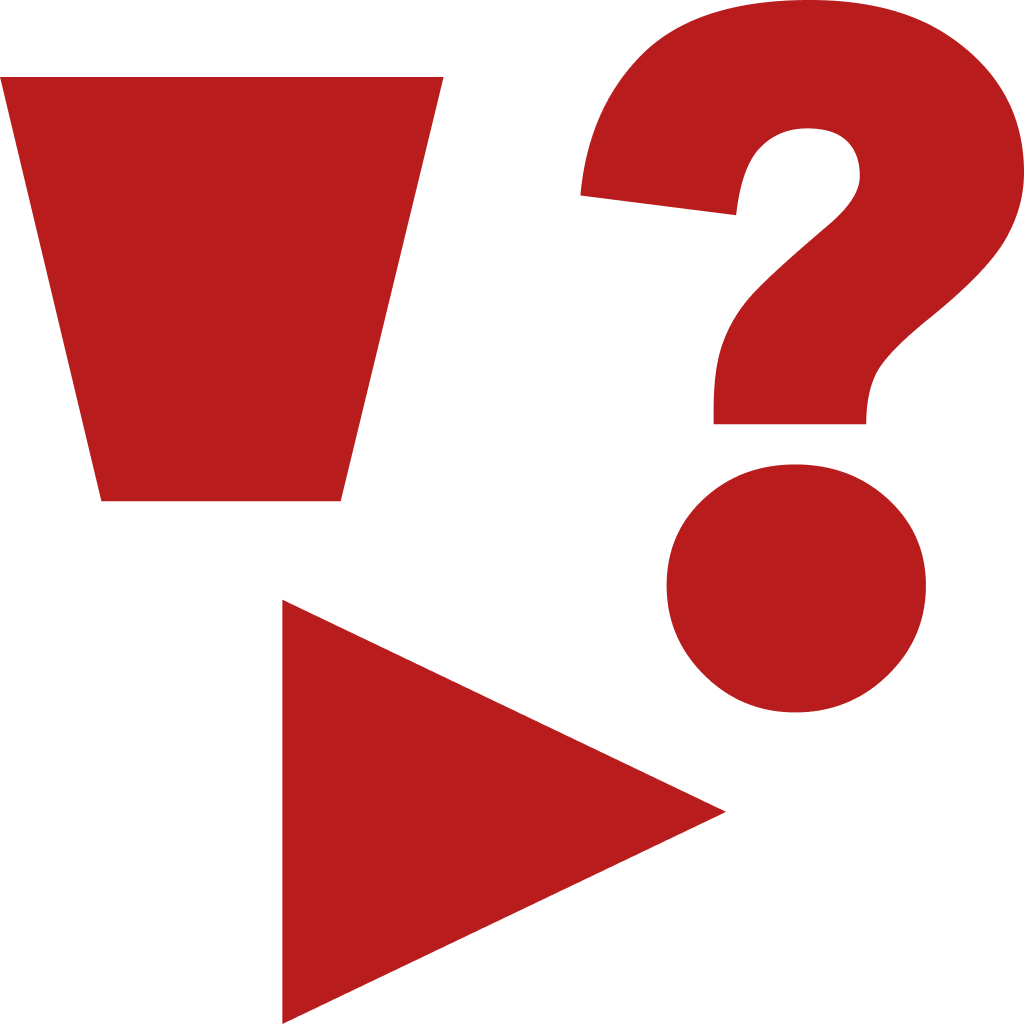
The logo uses four P&ID symbols:
| Shape | P&ID Element | Function | Tight Five |
|---|---|---|---|
| Trapezoid (top-left) | Hopper | Captures raw material | Why does this matter? |
| Triangle (bottom-left) | Pump | Drives flow | What do you control? |
| Circle (bottom-right) | Gauge | Measures reality | How do you know it's working? |
| Curve (top-right) | Controller | Reads, adjusts, questions | What do you see others don't? |
Four shapes. Four questions. But the logo asks five.
The Invisible Element
Look at the white space between the shapes.
The hopper captures. The pump drives. The gauge measures. The controller adjusts. But what decides what passes from one to the next? The space between them. The filter — principles that separate signal from noise. What truths guide you?
You cannot draw it. It is not a component. It is the relationship between components. The four shapes are visible. The fifth element is the reason they cohere into a question mark instead of four scattered symbols.
Every Tight Five works this way. Four things you can point to. A fifth you can only feel — the binding that makes the four into one. The question mark is not one of the four shapes. It is what they become when the fifth element holds them together.
The Question
The controller questions. It reads the gauge, compares reality to the setpoint, and asks: is this where we should be? If not, it adjusts.
The four shapes form a question mark because the system IS a question. It never settles. It keeps asking, measuring, adjusting. That is what makes it a feedback loop rather than a one-shot process.
HOPPER → FILTER → PUMP → GAUGE → CONTROLLER
  ↑                                    |
  └────────── feedback ────────────────┘
In a dairy factory, this loop controls temperature at the heat exchanger. The gauge reads reality. The controller compares it to the target. The pump adjusts.
In a mind, the same architecture runs. The hopper captures intention. Principles filter noise. Action drives progress. Measurement shows what happened. Perspective asks what to do differently.
Two Loops
The four stations run at two scales:
| Station | Inner (Mindset) | Outer (Environment) |
|---|---|---|
| Hopper | What do I care about? | What opportunities exist? |
| Filter | What principles guide me? | What standards apply? |
| Pump | What will I do? | What will I build? |
| Gauge | Did it work? | What do the numbers say? |
| Controller | What am I not seeing? | What is changing? |
When both loops run clean, you experience flow.
The VVFL Reading
The same shapes map to the Validated Virtuous Feedback Loop:
| Shape | VVFL Station | PromptDeck Slide | The instrument does |
|---|---|---|---|
| ▼ Hopper | Capture Inspiration | Slide 1: Principles | Hear the pain |
| (implied) Filter | Balance Priorities | The binding between slides | Name the friction |
| ▶ Pump | Focus Attention + Manifest Flow | Slide 3: Platform | Show the path |
| ● Gauge | Values vs Standards | Slide 2: Performance | Prove the step |
| ? Controller | Evolve + Reflect | Slide 4-5: Process + Players | Close the loop |
The Sales Reading
The logo is the demand validation pipeline:
- See their pain (hopper) — capture what they struggle with
- Name it better than they can (controller) — ask what they have not asked
- Show the path (pump) — connect what they cannot see
- Prove the value (gauge) — measurable step, transformed state
- The relationship (white space) — trust that compounds because you saw them first
The PromptDeck fills with their five things — their friction, their desire, their measurable step. When they read it and think "that is exactly my problem" — the instrument sold itself.
Context
- P&ID Control System — The engineering model in detail
- Agent & Instrument Diagrams — Extending P&ID to AI + Crypto
- The Tight Five — Five bound questions, one system
- VVFL Loop — The feedback loop the logo draws
- Validate Demand — The sales reading of the four shapes
- PromptDeck — The instrument that implements the logo's pattern
- Naming Standards — The system of names that gives the shapes meaning
- Systems — Feedback loops shape everything
Questions
What did you see before you had the words — and what does that tell you about where understanding actually lives?
- If the question mark is what the four shapes become when bound, what happens to the question when you remove one shape?
- The filter is invisible in the logo but determines everything that passes through — what's the invisible filter in your own feedback loop?
- When did the logo stop being a design and start being a diagram?